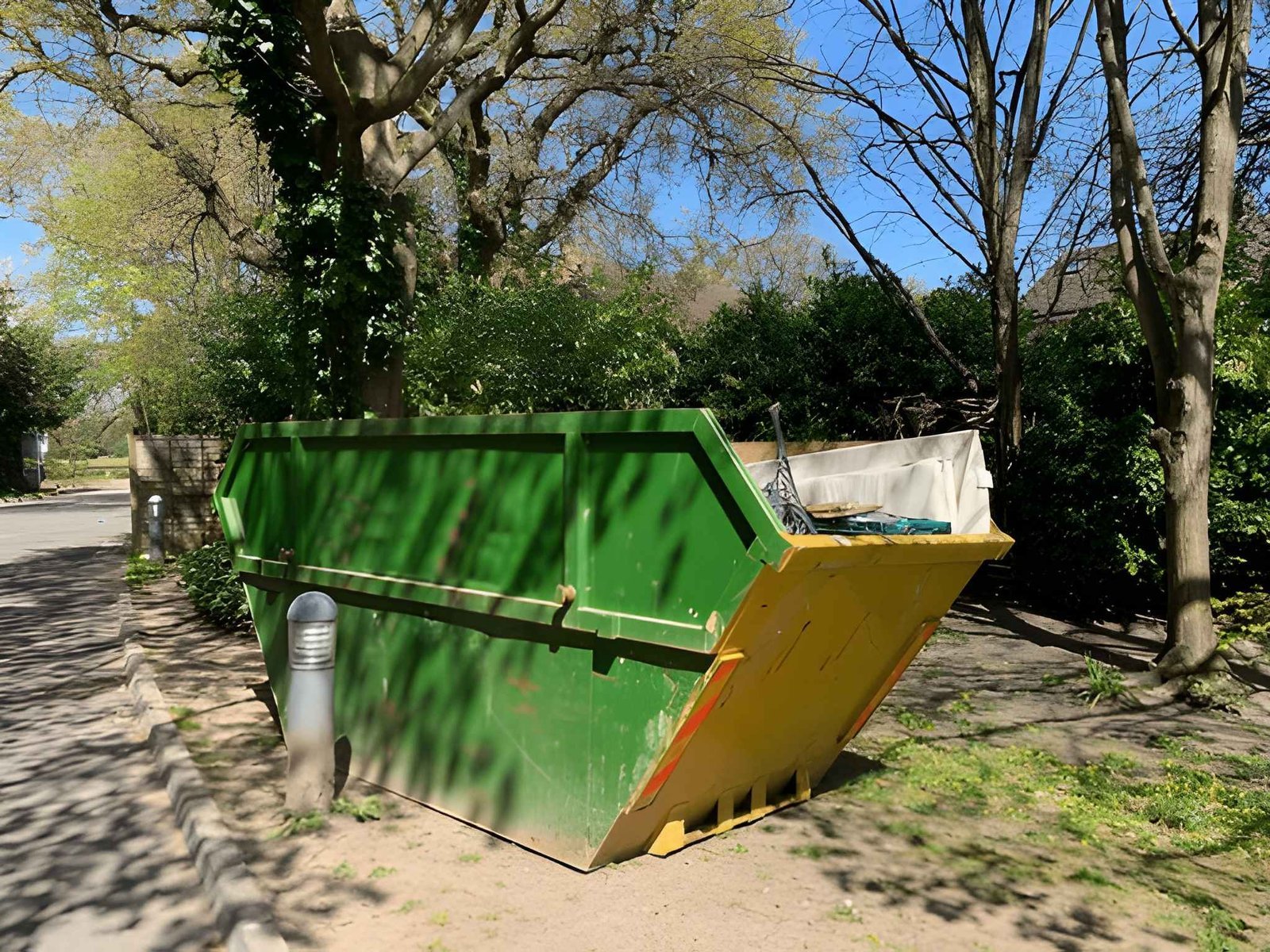
To load a skip bin, put flat and heavy items in first, break down bulky items, fill the gaps with smaller waste, spread the weight evenly, and stop when the waste is level with the rim. You can't overfill a skip bin: nothing can sit above the top edge or stick out the sides, because an overfilled bin can't be legally transported on NSW roads. If the bin is overfilled at collection, the excess has to come out first, or a failed trip fee may apply. A well-packed bin can hold far more than one filled at random.
- Load flat, heavy items first, then bulky items, then fill gaps with small waste.
- Break down furniture, flatten boxes and cut branches to make waste pack tightly.
- Waste must sit level with the rim. Nothing above the top or sticking out the sides.
- Spread heavy waste evenly and barrow it in through the walk-in door.
- Keep banned items out: asbestos, paint, gas bottles, batteries, tyres and e-waste.
How do you load a skip bin properly?
Load a skip bin in layers: flat and heavy items on the bottom, bulky items in the middle, and small, loose waste filling every gap. Spread the weight evenly and finish level with the rim.
- Sort before you start. Pull out anything that can't go in (paint, gas bottles, batteries, e-waste) and anything you want to keep, sell or donate.
- Lay flat items on the floor. Doors, plasterboard sheets, panels, timber and flattened cardboard form a solid base.
- Add heavy items next. Rubble, tiles and heavy furniture go low and spread across the floor, not piled at one end.
- Break down bulky items. Take legs off tables, remove cushions from couches, dismantle bed frames and shelving.
- Load bulky items in the middle layer, as tightly as possible, with flat sides against the bin walls.
- Fill the gaps with bags, small items, offcuts and loose waste. This is where most of the wasted space is.
- Finish level. Rake or pack the top layer flat, so nothing is above the rim or poking out.
Load from the far end of the bin back towards the walk-in door, and close and latch the door before you fill the last section near it. Every bin we hire, from 2m³ to 12m³, has a walk-in door.
Can you overfill a skip bin?
No. A skip bin can only be filled level with the rim, with nothing sitting above the top edge or sticking out the sides. It's illegal to transport an overfilled bin, because loose waste can fall onto the road.
NSW road rules require loads to be properly restrained so nothing can fall or blow off a vehicle. A skip bin with waste piled above the rim can't be lifted safely or covered, so the driver can't take it. That rule applies to every skip bin company, not just us.
If your bin is overfilled when we arrive, we'll ask you to remove the excess before we take it. If it can't be made safe at the time, we'll come back later and a failed trip fee applies, as set out in our terms and conditions.
| Fill level | OK to collect? |
|---|---|
| Below the rim | Yes |
| Level with the rim, packed flat | Yes |
| A few items just above the rim | Usually no, remove them first |
| Waste piled up in a mound | No |
| Long items sticking out the sides or end | No |
| Waste stacked beside the bin | Not included, and it won't be taken |
Bin filling faster than expected? Call us before it overflows. A same-day swap-out (book before midday, Monday to Saturday) is much cheaper than a failed trip and a second visit.
Is there a weight limit for a skip bin?
Yes. Every skip bin has a safe working limit, and the truck that carries it has a legal weight limit, so heavy waste needs a smaller bin. Light household waste rarely gets close, but soil, concrete and bricks reach the limit long before the bin is full.
That's why we ask what's going in when you book, and why heavy waste such as soil, bricks, concrete and tiles usually goes in a 2m³ to 4m³ bin. If you've booked a general waste bin and decide to add heavy material, call us first. A large bin with heavy rubble in it may be too heavy to lift safely, and the load will be reclassified at disposal.
As a rough guide, one cubic metre of soil weighs about 1.5 tonnes, while one cubic metre of household waste weighs about 0.15 to 0.3 tonnes. See soil, bricks and concrete in a skip bin for a full weight table.
How can I fit more into a skip bin?
Break everything down, fill every gap, and pack bulky items tightly instead of throwing them in. Air is the most common thing taking up space in a skip bin.
Furniture
Remove legs, drawers, doors and cushions. Dismantle bed frames, wardrobes and shelving into flat panels and stack them.
Boxes and packaging
Flatten every box. Cut up foam and polystyrene. Squash plastic wrap into bags rather than loose sheets.
Branches and prunings
Cut branches into shorter lengths and lay them all in the same direction. Stand on them to compress the pile.
Timber and offcuts
Stack lengths flat along the floor or walls. Pull or flatten protruding nails for safer handling.
Hollow items
Fill hollow items, such as drawers, buckets and storage tubs, with small waste instead of leaving them empty.
Bags of rubbish
Use bags to fill gaps between bulky items, not as the first layer. Bags squash into irregular spaces.
How do I load heavy or awkward items safely?
Use the walk-in door, a wheelbarrow or trolley, and a second person for anything you can't lift comfortably. Most skip bin injuries happen when people lift heavy items over the side of the bin.
- Use the walk-in door. Wheel barrows of rubble straight in, and slide heavy furniture in instead of lifting it.
- Lift with your legs, keep loads close to your body, and don't twist while carrying.
- Team lift couches, mattresses, whitegoods and long timber.
- Wear protection: gloves, closed shoes (steel caps for heavy waste), and eye protection when breaking things down.
- Don't climb on the sides. Step in through the door, and only stand on stable, flat waste.
- Watch for sharp edges: broken glass, nails and metal offcuts. Wrap broken glass before putting it in.
SafeWork NSW has guidance on manual handling. If an item is too heavy to load safely, leave it next to the bin and call us to talk about options before collection.
What shouldn't I put in the skip bin?
Never put asbestos, paint, chemicals, gas bottles, batteries, tyres, e-waste, liquids, or medical or food waste in a skip bin. They're dangerous, they contaminate the load, and they lead to extra charges.
Banned items are found when the bin is tipped and sorted, and the extra handling is charged back. Asbestos is the most serious: a bin with asbestos in it can't be tipped with other waste at all. Most of these items have free or low-cost drop-off points around Blacktown. See what can't go in a skip bin for the full list and where to take rubbish in Blacktown for drop-off locations.
Should I separate different types of waste in the bin?
Only put in the waste type you booked; if you booked mixed waste, you don't need to separate it, but keeping heavy waste together low in the bin helps.
If you booked green waste, only plant material should go in. If you booked clean fill, only clean soil. Adding other waste changes how the load is processed and can mean the price difference for the correct waste type is charged. If your job turns out different from what you expected, for example you start finding bricks in a garden bed, call us before you load it so we can adjust the booking.
How do I stop other people filling my skip bin?
Place the bin where you can see it, fill it quickly, and ask us to collect it as soon as you're done. An open bin on a driveway attracts other people's rubbish, especially overnight.
- Put the bin as close to the house as practical, rather than right at the kerb.
- Tell your neighbours it's for your job only.
- Cover it with a tarp overnight, tied down so it doesn't blow away.
- Check the bin each morning for items you didn't put in, especially paint tins, tyres and gas bottles.
- Book collection as soon as you've finished. See how long you can keep a skip bin.
What should I do if it rains while the bin is on my driveway?
Cover the bin, keep loading heavy waste low, and avoid loading soil or clay in heavy rain. Rain adds weight, especially to soil, green waste and cardboard.
A tarp keeps cardboard and light waste dry and stops it blowing around on windy days. Wet soil and clay can become much heavier, which can push a heavy-waste bin closer to its limit. If heavy rain is forecast for collection day, let us know if the ground around the bin is soft, because a loaded truck can damage a wet lawn or nature strip.
What should I check before collection?
Check five things: level with the rim, nothing sticking out, door latched, no banned items, and clear access for the truck. These checks prevent almost every failed collection.
- Fill level: waste is level with or below the rim.
- Edges: no timber, branches or metal sticking out the sides or end.
- Door: the walk-in door is closed and latched.
- Contents: no paint, gas bottles, batteries, tyres or asbestos.
- Access: cars, trailers and bins moved, so the truck can reverse to the same spot it used for delivery.
Then call, text or WhatsApp +61 432 666 474 to book collection. Bookings before midday are usually collected the same day, Monday to Saturday.
How should I load renovation and building waste?
Load renovation waste in the order it comes out: heavy rubble first and low, then linings and timber, then fittings and packaging on top. Renovations create waste in stages, so plan the loading as well as the bin.
On strip-out day, tiles, screed and bricks come out first. Barrow them in through the walk-in door and spread them evenly across the floor of the bin. Next come plasterboard, timber and old fittings: stack plasterboard sheets flat, break timber frames into lengths, and remove doors from cabinets so they nest together. Packaging from new fittings comes last. Flatten boxes, cut up foam and fill the remaining gaps.
Two rules matter most on renovation jobs. First, keep heavy waste in a heavy-waste bin, or at least low and spread out in a mixed bin, because tiles and rubble add up to a lot of weight very quickly. Second, check older homes for asbestos before anything is demolished, because it can never go in the bin. Our renovation waste removal guide covers bin sizes room by room, and builders can read our construction waste management guide. For tight driveways, see driveway and walk-in skip bins.
Frequently asked questions
How do you pack a skip bin?
Can you overfill a skip bin?
What happens if my skip bin is overfilled?
Is there a weight limit on skip bins?
How do I fit more in a skip bin?
Can I put waste next to the skip bin?
What is a walk-in skip bin door for?
Should I cover my skip bin?
Sources
- Skip Bin Hire Blacktown: Terms and conditions (filling the bin)
- SafeWork NSW: Manual handling
- NHVR: Loading and load restraint
Last checked 20 November 2026. Fees, hours and rules can change, so confirm with the provider before you go.