
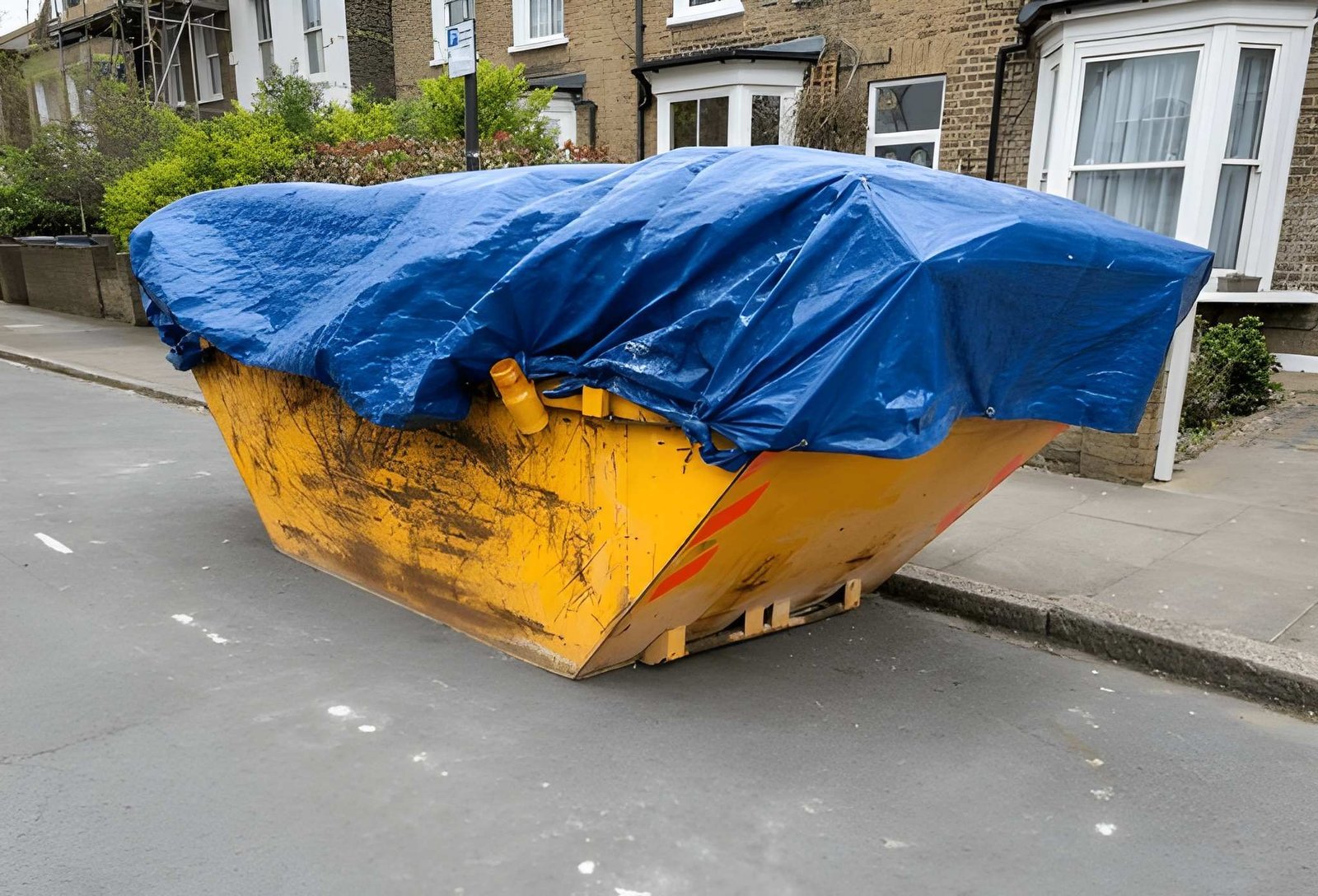
The easiest way to remove renovation waste in Blacktown is to hire a skip bin sized to the job and booked for the right waste type. A bathroom renovation usually needs a 3m³ to 4m³ bin ($375 to $445), a kitchen renovation a 6m³ bin ($650), and a whole-house renovation an 8m³ to 12m³ bin ($820 to $1,150), including GST. Council clean-ups don't take building waste, so a skip bin, a licensed transfer station or a rubbish removal service are the only practical options. Check homes built before 1990 for asbestos before you demolish anything.
- A bathroom renovation fills a 3m³–4m³ bin, a kitchen a 6m³ bin, and a whole house an 8m³–12m³ bin.
- Blacktown's council clean-up does not accept building or renovation waste, so plan your removal before you start.
- Book the right waste type: mixed renovation waste, or heavy waste for bricks, tiles and concrete.
- Homes built before 1990 may contain asbestos. It can never go in a skip bin.
- Time the bin for strip-out day. That's when most renovation waste is created.
What counts as renovation waste?
Renovation waste is everything removed or left over when you change the structure, fittings or finishes of a home. It includes old cabinets, tiles, plasterboard, timber, bricks, concrete, fixtures, flooring, packaging and offcuts.
In NSW, renovation waste falls under construction and demolition (C&D) waste, even when the job is a single bathroom. That matters for two reasons. First, council kerbside services aren't designed for it: Blacktown City Council's household clean-up specifically excludes building and renovation waste. Second, a lot of it is heavy. A bathroom's worth of tiles and screed can weigh more than a full house of furniture.
Most renovation waste falls into five groups, and each one is handled a little differently:
| Waste group | Typical items | Book it as |
|---|---|---|
| Strip-out waste | Cabinets, benchtops, vanities, baths, shower screens, doors, carpet | Mixed waste |
| Lining waste | Plasterboard, cornices, timber framing, insulation offcuts | Mixed waste |
| Heavy rubble | Tiles, bricks, concrete, screed, render, pavers | Heavy waste |
| Fit-out waste | Cardboard, plastic wrap, polystyrene, pallets, offcuts | General or mixed waste |
| Excavation | Soil, sand, clay and rock from footings or landscaping | Clean fill and soil |
Some renovation by-products are hazardous and need their own disposal path: asbestos, lead paint dust, leftover paint and solvents, adhesives, and old fluorescent tubes. We cover those further down.
How much waste does a renovation create?
A typical bathroom renovation creates 2–4 cubic metres of waste, a kitchen renovation 4–6 cubic metres, and a whole-house renovation 8–15 cubic metres or more. The exact amount depends on how much you strip back to the frame and whether walls or slabs come out.
Volume is only half of the picture. Bathrooms make a small volume of very heavy waste, because tiles, mortar beds and render are dense. Kitchens make a bigger volume of lighter waste: carcasses, doors and benchtops are bulky but hollow. Flooring jobs sit in between, depending on whether you're lifting carpet (light) or tiles and screed (heavy).
| Renovation | Waste volume | Weight profile | Recommended bin |
|---|---|---|---|
| Laundry refresh | 1–2m³ | Light to medium | 2m³ mini skip ($295) |
| Bathroom renovation | 2–4m³ | Heavy (tiles, screed) | 3m³–4m³ ($375–$445) |
| Ensuite plus laundry | 3–5m³ | Heavy | 4m³ heavy waste ($445) |
| Kitchen renovation | 4–6m³ | Mostly light, bulky | 6m³ ($650) |
| Flooring, whole house | 3–8m³ | Light (carpet) to heavy (tiles) | 4m³–8m³ ($445–$820) |
| Kitchen and bathroom together | 6–9m³ | Mixed | 8m³ ($820) |
| Whole-house renovation | 8–15m³+ | Mixed | 10m³–12m³ ($980–$1,150), or two bins |
| Extension or granny flat | 10–20m³ | Mixed, with offcuts and packaging | 12m³ marrel bin, with swaps |
Volumes are rough guides from the jobs we see across the Blacktown LGA. Prices are our published "from" rates, including GST, delivery, up to 7 days hire and disposal.
A quick way to check your own estimate: one standard 240-litre wheelie bin is about 0.24m³, so roughly 4 wheelie bins make 1 cubic metre. If you could fill 25 wheelie bins with what's coming out, you need about a 6m³ skip bin. Our skip bin size guide has an interactive finder for each type of job.
Which skip bin size do I need for a renovation?
Choose the bin by the heaviest waste in the job, not just the total volume. If the job is mostly tiles, bricks or concrete, a 3m³ to 4m³ heavy-waste bin is the right choice even for a large renovation, because a bigger bin full of rubble would exceed the truck's legal weight limit.
Bathroom renovations: 3m³ to 4m³
A standard Blacktown bathroom (about 2.5m by 2.5m) strip-out produces tiles, a mortar bed or screed, a vanity, a toilet, a bath or shower base, a screen and some plasterboard or villaboard. That usually fits a 3m³ bin. If you're also removing a tiled floor slab or doing an ensuite at the same time, go to a 4m³ bin and book it as heavy waste.
Kitchen renovations: 6m³
Kitchens are bulky. Base and wall cabinets, a benchtop, a rangehood, splashback tiles, a sink and packaging from the new kitchen add up quickly. A 6m³ bin holds about 25 wheelie bins of waste and suits most kitchens. Removing a wall between the kitchen and dining room usually pushes it to 8m³.
Whole-house renovations: 8m³ to 12m³, or more than one bin
For a full renovation it's often cheaper to stage two bins than to hire one giant bin for weeks. A common pattern is a 4m³ heavy-waste bin for tiles and bricks during demolition, then an 8m³ or 10m³ mixed-waste bin for linings, timber and fit-out packaging. Builders on longer jobs use a 12m³ marrel bin with swap-outs. You can read more about that in our commercial and construction skip bins guide.
Tip: if you're torn between two sizes, go one size up. Upgrading a bin usually costs less than a second delivery when the first bin fills. The exception is heavy waste, which must stay in a smaller bin.
How much does renovation waste removal cost in Blacktown?
Renovation waste removal with a skip bin costs $375 to $1,150 in Blacktown, including GST, for a 3m³ to 12m³ bin. Most bathroom renovations cost $375 to $445 to clear, and most kitchen renovations about $650.
The price of a renovation skip bin depends on four things: the bin size, the waste type, how long you keep the bin, and where it's placed. Heavy waste costs more to dispose of than general waste, because tipping fees and the NSW waste levy are charged by the tonne. The levy in the Sydney Metropolitan Levy Area was $174.20 per tonne in 2025–26, according to the NSW EPA, and the NSW Government has said 2026–27 rates won't rise above CPI.
Here's how the main options compare for a typical kitchen renovation (about 5m³ of waste):
| Option | Typical cost | Effort | Best for |
|---|---|---|---|
| 6m³ skip bin | From $650, all-in | Load at your own pace over up to 7 days | Most DIY and builder renovations |
| Trailer runs to a transfer station | Gate fee per load, plus trailer, fuel and time | 3–5 trips, each loaded and unloaded by hand | Very small jobs |
| Rubbish removal (man-and-van) | Usually charged per load or by volume | None, the crew loads | One-off clear-outs after the job |
| Council household clean-up | No extra fee | Kerbside placement | Not suitable: building waste isn't accepted |
For a full breakdown of prices and fees, read how much skip bin hire costs in Blacktown.
Can I mix renovation waste in one skip bin?
Yes, you can mix most renovation waste in one bin if you book it as mixed waste, but heavy rubble and soil are best kept separate. Mixed waste bins take plasterboard, timber, cabinets, packaging and general rubbish together.
Mixing becomes a problem in two situations. The first is weight: if half the bin is tiles and bricks, it may go over the weight limit. The second is processing: clean loads of concrete, bricks or soil can be recycled into road base and fill, while a load with plasterboard or timber mixed through has to be sorted first. That's why heavy waste is priced differently, and why the wrong waste type can change the price after collection.
The waste types we take at Skip Bin Hire Blacktown are:
- General waste: household rubbish, furniture, packaging and light items.
- Mixed waste: household and renovation waste together, such as plasterboard, timber and old fittings.
- Heavy waste: bricks, concrete, tiles and rubble.
- Clean fill and soil: uncontaminated dirt, sand and clay.
- Green waste: branches, prunings, leaves and lawn clippings.
Not sure which one your job is? Tell us what's coming out when you book and we'll match the bin. Our guide to putting soil, bricks and concrete in a skip bin explains heavy loads in detail.
What should I check before demolishing anything?
Check for asbestos before you cut, drill or demolish anything in a home built before 1990. Asbestos was widely used in Australian homes until the mid-1980s and was banned nationally on 31 December 2003. It can never go in a skip bin.
Many of the established suburbs in the Blacktown LGA, including Blacktown, Seven Hills, Doonside, Lalor Park, Mount Druitt and Toongabbie, have large numbers of homes from the 1950s to the 1980s. In homes from that period, asbestos is commonly found in:
- Fibro wall sheeting, especially in bathrooms, laundries and external cladding.
- Eaves and soffit linings.
- Vinyl floor tiles and the backing of old sheet vinyl.
- Wet-area linings behind tiles.
- Fences, garden sheds and garages built from fibro.
- Old roofing, gutters and downpipes.
In NSW, a homeowner may remove up to 10 square metres of bonded (non-friable) asbestos following SafeWork NSW guidance. More than 10 square metres, or any friable asbestos, must be removed by a licensed asbestos removalist. Either way, asbestos must be wrapped and taken to a facility licensed to accept it. If you're unsure whether a material contains asbestos, have it tested before work starts. A positive result found mid-job stops the job.
Found something suspicious in the bin? Stop loading and call us on +61 432 666 474. A skip bin containing asbestos can't be tipped with other waste, so it's far cheaper to deal with it early than after collection.
Other materials to keep out of a renovation bin include paint, solvents and adhesives, gas bottles, batteries, fluorescent tubes and e-waste. See what can't go in a skip bin and where to take rubbish in Blacktown for free drop-off points.
How do I plan waste removal for a renovation?
Plan waste removal in four stages: before the job, strip-out day, the build, and the final clean. Most renovation waste is created in the first few days, so the bin should arrive the day before demolition starts.
- Two weeks before: confirm whether the home was built before 1990 and test anything suspicious for asbestos. Sell or donate fittings that still work, such as kitchen cabinets, doors and taps.
- One week before: estimate the volume room by room, choose the bin size and waste type, and decide where the bin will sit. Book delivery for the day before strip-out.
- Strip-out day: load the heaviest items first and flat items next. Break down cabinets so they stack. Keep tiles and rubble together in one part of the bin if you've booked mixed waste.
- During the build: once the strip-out bin is full, book a swap-out for the build stage. Offcuts and packaging fill bins faster than people expect.
- Final clean: a 2m³ or 3m³ bin is usually enough for the last sweep of packaging, offcuts and dust.
Keeping the bin on your driveway is the simplest option. There's no council approval needed and the bin is easy to load from the house. Every bin we hire has a walk-in door, so you can wheel a barrow of tiles straight in instead of lifting it over the side. Driveway protection boards are free on request. See driveway and walk-in skip bins for placement details.
What goes in the skip bin from each room?
Almost everything removed from a kitchen, bathroom, laundry or living area can go in a skip bin, except hazardous materials. Here's what to expect room by room.
Kitchen
Cabinets and doors, benchtops (laminate, timber or stone offcuts), splashback tiles, sink and tapware, rangehood, old pantry shelving, plasterboard and the new kitchen's packaging. Take the old fridge and dishwasher to a whitegoods recycler or book the council's whitegoods collection.
Bathroom and ensuite
Wall and floor tiles, screed and mortar, vanity, basin, toilet, bath or shower base, shower screen glass, villaboard and waterproofing offcuts. Wet-area linings in older homes may be fibro, so check for asbestos first.
Laundry
Tub and cabinet, tiles, splashback, shelving and doors. Leftover detergents, bleach and chemicals go to a Community Recycling Centre, not the bin.
Living areas and bedrooms
Carpet and underlay, floating floorboards, skirting boards, built-in wardrobes, doors, light fittings and plasterboard. Old fluorescent tubes and globes go to a recycling drop-off point.
Outside
Old decking, pergolas, fence palings, pavers and concrete paths. Green waste from clearing the yard can go in the same bin if you book mixed waste, or in a cheaper green-only bin.
Fit-out packaging
Cardboard, plastic wrap, foam, timber crates and pallets from new appliances and fittings. Flatten cardboard and break down crates so they don't waste space.
Can renovation waste be recycled?
Yes. Most renovation waste is recyclable when it's kept clean and separated, especially concrete, bricks, metal, timber and cardboard. NSW has one of Australia's highest recovery rates for construction and demolition waste, because heavy materials are crushed and reused as road base and aggregate.
You don't have to sort everything yourself. Skip bin loads go to licensed facilities where recyclable material is recovered. But a few simple habits make a real difference to how much is recovered and, often, to what you pay:
- Keep heavy rubble clean. Concrete, bricks and tiles without plasterboard, timber or plastic mixed through are the easiest material to recycle.
- Pull out metal. Old tapware, copper pipe, steel frames and aluminium windows have scrap value. Many people sell them to a scrap metal dealer.
- Reuse what works. Kitchen cabinets, doors, timber flooring, bricks and pavers sell quickly on Facebook Marketplace and Gumtree. Some charities accept good-condition fittings.
- Return pallets. Pallets from suppliers are often branded (blue CHEP or red Loscam) and owned by a pallet-pooling company. Ask the supplier to collect them.
Should I or my builder organise the skip bin?
Either works, but agree on it in writing before the job starts so waste removal isn't missed or paid for twice. Builders often include waste removal in their quote, while DIY renovators and owner-builders book their own bin.
If your builder is organising the bin, ask three questions: what size and how many swaps are included, how long the bin can stay, and who's responsible for waste left after the final clean. If you're managing the job yourself, booking the bin directly gives you control over timing, size and cost. You pay on delivery by cash or card, with no deposit and no account needed.
Trades and builders working across Blacktown can also arrange scheduled swap-outs, long-term hire and disposal dockets for their records. See residential skip bin hire for homeowners, or commercial and construction skip bins for builders.
What are the most common renovation waste mistakes?
The five most common mistakes are booking too small a bin, mixing heavy waste into a large bin, overfilling, booking the bin too late, and putting hazardous waste in. Each one costs time or money, and all of them are avoidable.
- Underestimating volume. Waste bulks up once it's broken. Cabinets, doors and frames take more space in pieces than they did on the wall.
- Overloading with heavy waste. A large bin full of tiles and bricks can't be legally lifted. Use a heavy-waste bin for rubble.
- Filling above the rim. Waste must sit level with the top of the bin. An overfilled bin can't be transported, and the excess has to come out before collection. Our guide on how to load a skip bin shows how to pack it properly.
- Booking late. Waste piling up on the lawn or driveway slows the job down and can damage the garden. Have the bin there the day before demolition.
- Hiding banned items. Paint tins, gas bottles and asbestos are found when the bin is tipped, and the extra handling is charged back.
Frequently asked questions
What size skip bin do I need for a bathroom renovation?
What size skip bin do I need for a kitchen renovation?
Does Blacktown Council take renovation waste?
Can I put plasterboard in a skip bin?
Can I put tiles in a skip bin?
Can I put asbestos in a skip bin?
How long can I keep a skip bin for a renovation?
Is it cheaper to hire a skip bin or use a rubbish removal service for renovation waste?
Sources
- Blacktown City Council: Household clean-up service
- SafeWork NSW: Asbestos
- NSW EPA: Waste levy areas and levy rates
- NSW Government: Waste levy rates for 2026–27
Last checked 20 November 2026. Fees, hours and rules can change, so confirm with the provider before you go.