
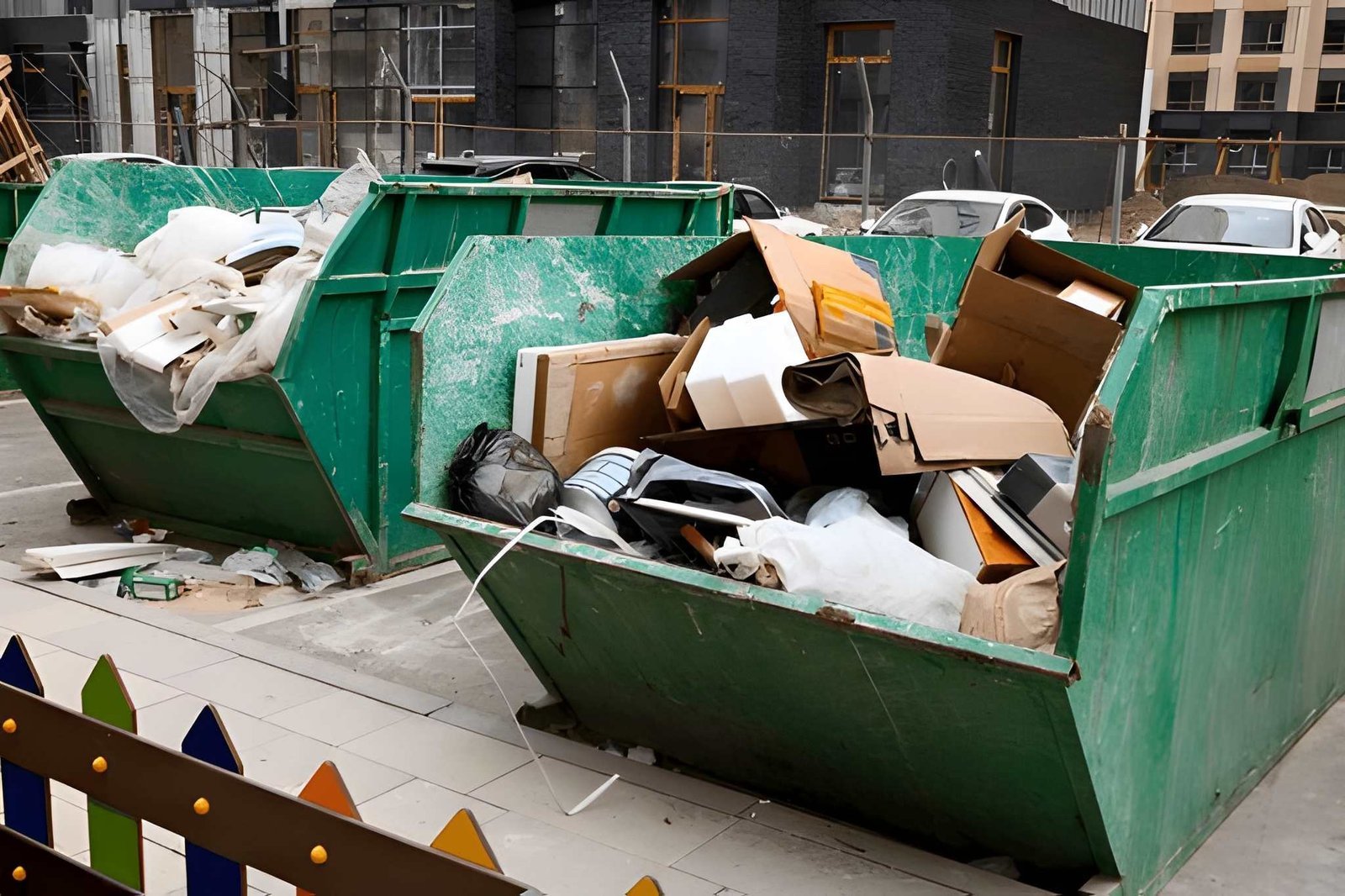
Construction waste management means planning, containing, separating and lawfully disposing of the waste a building job creates, from demolition to handover. On a Blacktown site that usually means a waste management plan lodged with the development application, the right skip bin for each build stage (often a 4m³ heavy-waste bin for rubble and a 10m³ to 12m³ bin for mixed waste), keeping rubble and soil separate for recycling, and keeping disposal dockets. Under NSW law the waste owner, not just the carrier, is responsible for where the waste ends up.
- Most Blacktown DAs with demolition or construction include a Waste Management Plan under the Blacktown DCP.
- Match the bin to the build stage: heavy waste early, bulky mixed waste during framing and fit-out.
- Clean, separated concrete, bricks, soil and metal are the cheapest streams to dispose of because they're recycled.
- In NSW the waste owner and the transporter can both be liable if waste goes to an unlawful place.
- Keep disposal dockets: they prove lawful disposal and support your waste plan and certifier sign-off.
What is construction and demolition waste?
Construction and demolition (C&D) waste is the solid waste created when buildings and structures are built, renovated or demolished. It's the largest waste stream in NSW by weight, and most of it can be recovered.
C&D waste includes excavated soil and rock, concrete, bricks, tiles, timber, plasterboard, metals, glass, insulation, plastics and packaging. Under the NSW EPA's Waste Classification Guidelines, most of it is general solid waste (non-putrescible). A few materials are treated differently: asbestos is special waste, contaminated soil may be restricted or hazardous, and liquids such as paint wash-water can't go in a skip bin.
The Blacktown LGA has more construction underway than almost anywhere in Sydney. The North West Growth Area suburbs, such as Marsden Park, Schofields, Riverstone and Colebee, have thousands of new homes being built, while established suburbs see constant knock-down rebuilds, granny flats and extensions. That makes managing site waste well a real competitive advantage for builders working here. Homeowners managing a smaller job should read our renovation waste removal guide.
| Material | Where it comes from | Usual destination |
|---|---|---|
| Concrete and bricks | Demolition, slab cuts, footings, paths | Crushed into recycled aggregate and road base |
| Excavated soil (VENM) | Site cuts, footings, pools | Reused as fill, or a soil recycler |
| Timber | Framing offcuts, formwork, pallets | Recovered as mulch or fuel; treated timber to landfill |
| Metals | Reo offcuts, roofing, frames, pipe | Scrap metal recycling |
| Plasterboard | Lining offcuts, demolition | Separate recovery where available, otherwise landfill |
| Packaging | Fit-out, appliances, materials deliveries | Cardboard and plastic recovered at sorting facilities |
| Mixed C&D waste | Everything combined | Sorted at a licensed resource recovery facility |
Do I need a waste management plan for a build in Blacktown?
Usually, yes. Development applications in Blacktown that involve demolition or construction typically include a Waste Management Plan prepared under the Blacktown Development Control Plan (DCP). Check your consent conditions, because the plan and any waste conditions become part of the approval.
A construction Waste Management Plan (WMP) sets out the waste you expect to create, how much of it, how it will be stored on site, who will remove it, and where it will be taken. Plans submitted to Blacktown City Council generally cover three stages: demolition, construction and ongoing (operational) waste for the finished building.
A practical WMP for a house or small development covers:
- Estimated volumes of each material, in cubic metres or tonnes.
- On-site storage: bin sizes, locations and how they're kept off the footpath and away from stormwater drains.
- Separation: which streams are kept apart (concrete, bricks, soil, metal, timber, mixed).
- Reuse on site: for example, clean excavated soil used for levelling or landscaping.
- Destinations: the licensed facility each stream goes to.
- Records: how you'll keep disposal dockets as evidence.
Even when a job is exempt or complying development, working to a simple plan avoids overflowing bins, unhappy neighbours and wasted swap-outs. Your certifier or the council may ask for evidence of where waste went.
What are a builder's legal duties for site waste in NSW?
In NSW, anyone who owns or transports waste must make sure it goes to a place that can lawfully accept it. Under the Protection of the Environment Operations Act 1997, both the owner of the waste and the transporter can be guilty of an offence if waste is taken to an unlawful place.
That's why the cheapest quote isn't always the safest one. If a carrier dumps your site waste illegally, the investigation can come back to the site it came from. The NSW EPA and councils investigate illegal dumping, and penalties for individuals and companies are significant.
To protect yourself:
- Use an established skip bin or waste company that disposes of waste at licensed facilities.
- Ask for disposal dockets or a weighbridge record for each load, and keep them with your job file.
- Never accept "free fill" or let someone take soil away without knowing where it's going. Contaminated fill is one of the most common illegal dumping problems in Western Sydney.
- Keep waste on your site and off the road, footpath and nature strip unless council approval is in place.
- Control sediment and dust. Uncovered stockpiles and bins near kerbs can wash into stormwater, which is a pollution offence.
Asbestos on a demolition job: licensed removal is required for more than 10 square metres of bonded asbestos and for any friable asbestos, and the waste must go to a licensed facility with tracking. It can never go in a skip bin. Demolition of pre-1990 buildings should start with an asbestos survey.
Which skip bin sizes do builders need at each stage?
Use a small heavy-waste bin for demolition, excavation and slab work, then a large bin for framing, lock-up and fit-out. Waste changes from heavy and dense to light and bulky as a build progresses, and the bins should change with it.
| Build stage | Main waste | Recommended bin |
|---|---|---|
| Demolition | Bricks, concrete, tiles, roofing, timber | 4m³ heavy waste, swapped as needed |
| Site cut and footings | Soil, clay, rock | 2m³–4m³ clean fill and soil |
| Slab and base | Concrete washout solids, formwork, plastic | 4m³–6m³ mixed |
| Frame | Timber offcuts, strapping, packaging | 8m³–10m³ mixed |
| Lock-up | Roofing offcuts, brick waste, window packaging | 10m³ mixed, plus a small heavy bin for brick cuts |
| Fixing and fit-out | Plasterboard, cardboard, foam, cabinet packaging | 10m³–12m³ mixed |
| Handover clean | Final packaging, offcuts, sweepings | 3m³–6m³ general |
Our commercial and construction skip bins range from a 3m³ trade bin ($375) to a 12m³ marrel bin ($1,150), including GST. A marrel bin is lifted by hydraulic arms, so it can be placed in tighter spots than a hook-lift bin. We don't use hook-lift bins, and 12m³ is our largest size.
For heavy waste, a bigger bin isn't better. A 12m³ bin full of bricks would weigh far more than a truck can legally carry. Heavy-waste bins are kept smaller for that reason. See soil, bricks and concrete in a skip bin for typical weights.
Should building waste be separated on site?
Yes, where you have the room. Separating concrete, bricks, soil and metal from mixed waste lowers disposal costs and raises recycling rates. Clean heavy materials are crushed and sold as recycled products, while mixed loads must be sorted first.
On a tight suburban lot there's rarely room for five bins, so most builders use a two-bin system: one small bin for heavy, clean rubble and one large bin for everything else. On bigger sites, a separate metal stockpile or cage often pays for itself in scrap value.
What contaminates a clean load:
- Plasterboard or timber mixed into a concrete or brick bin.
- Plastic, cement bags or rubbish in a soil bin.
- Green waste or tree roots in clean fill.
- Any sign of asbestos fragments in demolition rubble.
If a bin booked for one waste type arrives at the facility with another, the load may be reclassified and charged at the higher rate. Under our terms, the price difference for the correct waste type is charged when this happens, so it pays to brief everyone on site, including subcontractors, about which bin is which.
How much does construction waste disposal cost in Blacktown?
Construction skip bins in Blacktown cost from $375 for a 3m³ bin to $1,150 for a 12m³ marrel bin, including GST. The total waste bill for a new home is usually a series of bins and swap-outs across the build.
What drives the cost of building waste:
- Weight and waste type. Tipping fees and the NSW waste levy are charged by the tonne. The Metropolitan Levy Area rate was $174.20 per tonne in 2025–26, and the NSW Government has said 2026–27 rates won't rise above CPI.
- Separation. Clean concrete, brick and soil loads cost less to process than mixed loads.
- Number of swaps. A bin that fills in a day on a busy site needs regular swap-outs. Book them before midday for a same-day swap.
- Hire length. The standard hire is up to 7 days. Long-term hire is available for active sites.
- Placement. A bin on the road or footpath needs council approval, and the council's fee is added at cost.
You pay per bin on delivery by cash or card. There's no trade account to set up and no deposit. For a full list of prices, see skip bin hire cost in Blacktown.
Where should a skip bin go on a building site?
Place the bin inside the site boundary, on firm level ground, close to where waste is created and clear of the truck's turning path. A bin on a road, footpath or nature strip needs Blacktown City Council approval first.
On new-home lots in the growth corridor, the bin usually sits at the front of the lot beside the temporary driveway. On knock-down rebuilds and extensions, it usually goes on the existing driveway. Think about the whole build: the bin shouldn't block concrete trucks, scaffold deliveries or the brick pallet drop.
- Ground: firm and level. Soft ground after rain can bog a loaded truck.
- Overhead: clear of power lines and tree branches, because the bin is lifted on and off the truck.
- Access: the truck must reverse into the same spot to collect, so keep the area clear on swap day.
- Drains: away from stormwater pits, so rain doesn't wash fines into the drain.
If the site is tight, every bin we supply has a walk-in door for barrow loading. Read our skip bin placement guide for road and driveway rules.
What records should builders keep for waste?
Keep disposal dockets or weighbridge records for each load, your waste management plan, and any council approvals for bins on public land. Together they show that waste was handled the way your consent required.
Records help in three situations: when a certifier or council asks how waste was managed, when a client wants evidence for a sustainability report or green building rating, and when there's a dispute about illegal dumping. Disposal dockets are available on request with our commercial bins. Just ask when you book, and tell us if you need them in a particular format for your site paperwork.
How can builders reduce construction waste?
The cheapest waste is the waste you never create. Better ordering, prefabrication and reuse on site cut both disposal costs and material costs.
- Order accurately. Over-ordering bricks, plasterboard and timber is a leading cause of site waste.
- Use standard sizes. Designing to standard sheet and stud sizes reduces offcuts.
- Prefabricate. Frames and trusses made off site produce far less timber waste on site.
- Reuse soil. Clean excavated soil can level the lot or build garden beds instead of leaving site.
- Return packaging and pallets. Many suppliers take back pallets, especially pooled CHEP and Loscam pallets, and some take back packaging.
- Keep offcuts for noggins and blocking. A labelled offcut pile stops good timber going in the bin.
What's different about building in the Blacktown growth corridor?
Growth-corridor sites in Marsden Park, Schofields, Riverstone and Colebee are new lots with fresh roads, tight neighbouring builds and frequent street-parking pressure. Those conditions make bin placement, timing and tidiness more important than on an established street.
When a whole street is being built at once, several builders compete for the same kerb space, and estates often have their own developer rules about site tidiness and bins on footpaths. Keep bins inside the lot, swap them before they overflow, and cover loads on windy days. Flood-prone low-lying areas in Riverstone also need extra care with stockpiles after rain.
We deliver across all 54 suburbs of the Blacktown LGA with no distance fee, including the growth corridor and the Arndell Park, Huntingwood and Eastern Creek industrial areas. See our service areas.
Frequently asked questions
What is the best way to manage construction waste?
Do I need a waste management plan for a DA in Blacktown?
What size skip bin do builders use?
Can construction waste go in one mixed skip bin?
Who is responsible if construction waste is dumped illegally?
Can I get disposal dockets for my construction waste?
Can I swap a full construction bin for an empty one on the same day?
Can asbestos go in a construction skip bin?
Sources
- Blacktown City Council: Blacktown Development Control Plan 2015
- NSW EPA: Waste planning in development applications
- NSW EPA: Waste levy areas and levy rates
- NSW Government: Waste levy rates for 2026–27
- NSW Legislation: Protection of the Environment Operations Act 1997
- SafeWork NSW: Asbestos
Last checked 20 November 2026. Fees, hours and rules can change, so confirm with the provider before you go.